“Full coverage” is a common insurance industry term, not a single standardized policy package. In 2026, it generally refers to a policy that combines the liability insurance required by the state with collision and comprehensive coverage. However, insurers can offer different coverage limits, deductibles, exclusions, and optional endorsements under that label, so two policies described as full coverage may provide different protection.
Liability insurance pays for injuries to other people and damage to their property when you are responsible for a crash. Collision coverage helps pay to repair or replace your vehicle after it strikes another vehicle or object, or after it overturns, regardless of who caused the accident, subject to the policy deductible. Comprehensive coverage generally applies to non-collision losses. It can help cover theft, vandalism, hail and other weather damage, fire, falling objects, and collisions with animals such as deer. Comprehensive and collision coverage usually pay the vehicle’s actual cash value, rather than its original purchase price, if the car is declared a total loss.
Despite its broad-sounding name, full coverage does not automatically include every available protection. Uninsured or underinsured motorist coverage may be separate, even though it can help when another driver lacks sufficient insurance. Medical payments coverage and personal injury protection can assist with medical expenses, depending on the state and policy. Rental reimbursement, roadside assistance, and gap insurance are also commonly optional. Gap insurance may be particularly relevant when a financed or leased vehicle’s loan balance exceeds its market value.
When comparing the 2026 cost of full coverage car insurance, consumers should evaluate equivalent policies rather than relying on the label alone. Compare identical liability limits, collision and comprehensive deductibles, vehicle-use details, and endorsements. A lower quote may reflect weaker liability protection or higher out-of-pocket costs after a claim. Reviewing each component makes rate differences easier to understand and helps ensure that the selected policy matches the driver’s financial risks and coverage priorities.
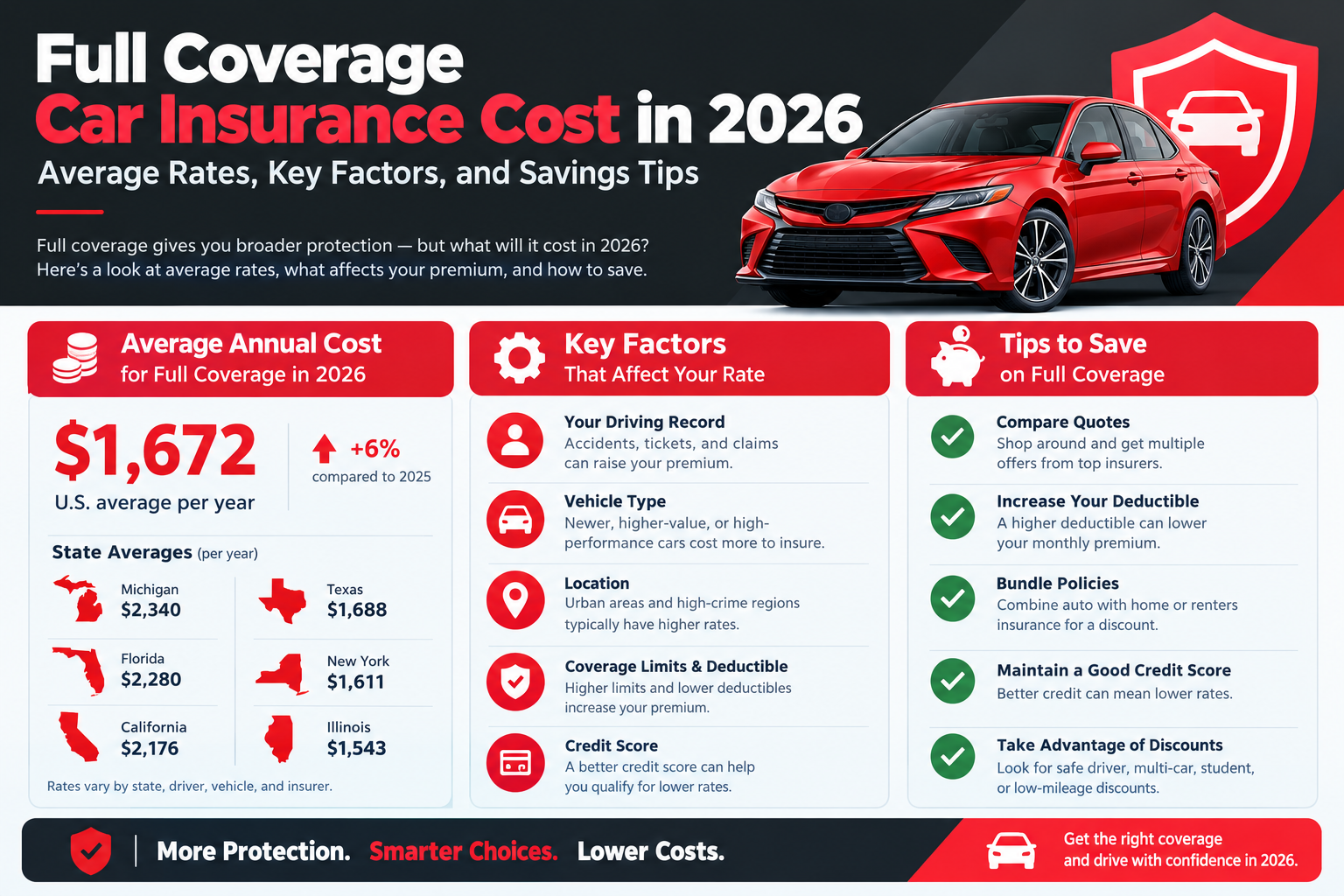
National planning estimate: The average full coverage car insurance cost in 2026 is expected to fall within a broad range of approximately $1,800 to $3,000 per year, or about $150 to $250 per month for many drivers. This is a planning benchmark, not a universal price. Some motorists may receive quotes below this range, while high-risk drivers, younger motorists, and residents of expensive insurance markets may pay considerably more.
Published averages should be interpreted carefully because 2026 auto insurance rates depend on the insurer, state, city, driving history, age, credit-based insurance profile where permitted, annual mileage, claims record, vehicle model, repair costs, coverage limits, and deductible. A policy with higher liability limits, comprehensive and collision coverage, rental reimbursement, or a low deductible will generally cost more than a basic package. For that reason, a national estimate cannot predict an individual driver’s exact premium.
Monthly comparison: A driver paying $2,400 annually would have an effective monthly full coverage insurance cost of $200, although installment plans may include billing fees. By contrast, minimum liability insurance could cost roughly $500 to $1,200 per year in many markets, or approximately $42 to $100 per month. Moving from minimum coverage to full coverage can therefore add hundreds or more than $1,000 annually, depending on the vehicle and driver profile.
The policy premium is only one part of the total cost of owning a vehicle. Owners may also pay sales or property taxes, registration and title fees, maintenance, fuel, parking, loan interest, and other operating expenses. Lenders commonly require comprehensive and collision coverage for financed or leased vehicles, which can increase the insurance bill. However, safe-driver programs, bundling home and auto policies, paid-in-full billing, vehicle safety features, defensive-driving courses, and higher deductibles may reduce the premium when available.
Because insurer pricing models vary substantially, obtain several personalized quotes before selecting coverage. Compare identical limits, deductibles, exclusions, and optional benefits so that the quoted prices represent comparable protection rather than simply the lowest advertised rate.
Insurers calculate full coverage car insurance premiums by evaluating the likelihood and potential cost of a claim. Location is a major variable. State regulations can affect required coverage and pricing rules, while local claim frequency, accident rates, medical expenses, severe weather, and vehicle theft also influence rates. An urban address may cost more than a rural one because of traffic density, collisions, vandalism, and theft, although rural drivers can face higher premiums where emergency services are distant or accident severity is greater.
Your driving profile is equally important. Tickets, at-fault accidents, prior claims, and DUI convictions generally signal greater risk and can raise premiums for several years. Age and driving experience also matter: newer drivers commonly pay more, while rates often decline as motorists build a longer, safer record. In states where it is legally permitted, insurers may use a credit-based insurance score to estimate claim risk. Annual mileage and commute distance can affect pricing as well, since more time on the road usually creates more opportunities for a collision.
The vehicle itself can substantially change the quote. Insurers consider its make, model, age, market value, safety equipment, repair costs, and theft risk. Liability limits are another key choice; higher limits provide more financial protection but typically increase the premium. Comprehensive and collision deductibles work in the opposite direction: selecting a higher deductible can reduce the monthly or annual cost, but it leaves you responsible for more out-of-pocket expenses after a covered claim. Optional coverage, such as rental reimbursement or roadside assistance, adds protection and may raise the price. A financed or leased vehicle often requires comprehensive and collision coverage, and the lender’s required limits may differ from your preferred level of protection. Review the declarations page and ask each insurer which rating factors affected your quote before choosing a policy.
Reducing full coverage car insurance costs in 2026 starts with comparing like-for-like quotes. Request estimates from several insurers using identical liability limits, deductibles, comprehensive and collision options, uninsured-motorist protection, and optional endorsements. A lower premium may reflect less protection, narrower coverage, or higher out-of-pocket costs, so compare the policy details rather than the headline price alone. Bundling auto insurance with homeowners or renters insurance can produce a worthwhile discount, although separate policies may sometimes be cheaper.
Ask each insurer to review available savings opportunities. Common options include safe-driver, defensive-driving, low-mileage, good-student, telematics, vehicle-safety, and paid-in-full discounts. Maintaining a clean driving record remains one of the most reliable ways to control future rates. Where credit-based insurance pricing is permitted, improving credit habits may also help over time. Review your policy after moving, changing jobs, reducing annual mileage, adding or removing a driver, buying a vehicle, or experiencing another major life change.
Raising comprehensive and collision deductibles can reduce premiums, but it makes sense only if you can comfortably pay the higher amount after a covered loss. Keep an emergency reserve that covers the selected deductibles before making this change. For an older vehicle, compare the yearly cost of comprehensive and collision coverage with the car’s actual cash value and your ability to replace it. Dropping either coverage may be inappropriate when a lender requires it, or when replacing the vehicle would create financial hardship. Liability and other legally required protection should remain in place.
Before choosing a policy, use this 2026 checklist: compare at least three quotes with matching limits; verify exclusions, deductibles, endorsements, and state-specific requirements; assess claims handling and customer service; check the insurer’s financial strength; confirm available discounts; and ask how renewal pricing is determined. Recheck the final premium, payment fees, and coverage limits in writing so the selected policy offers dependable protection, not merely the lowest initial rate.