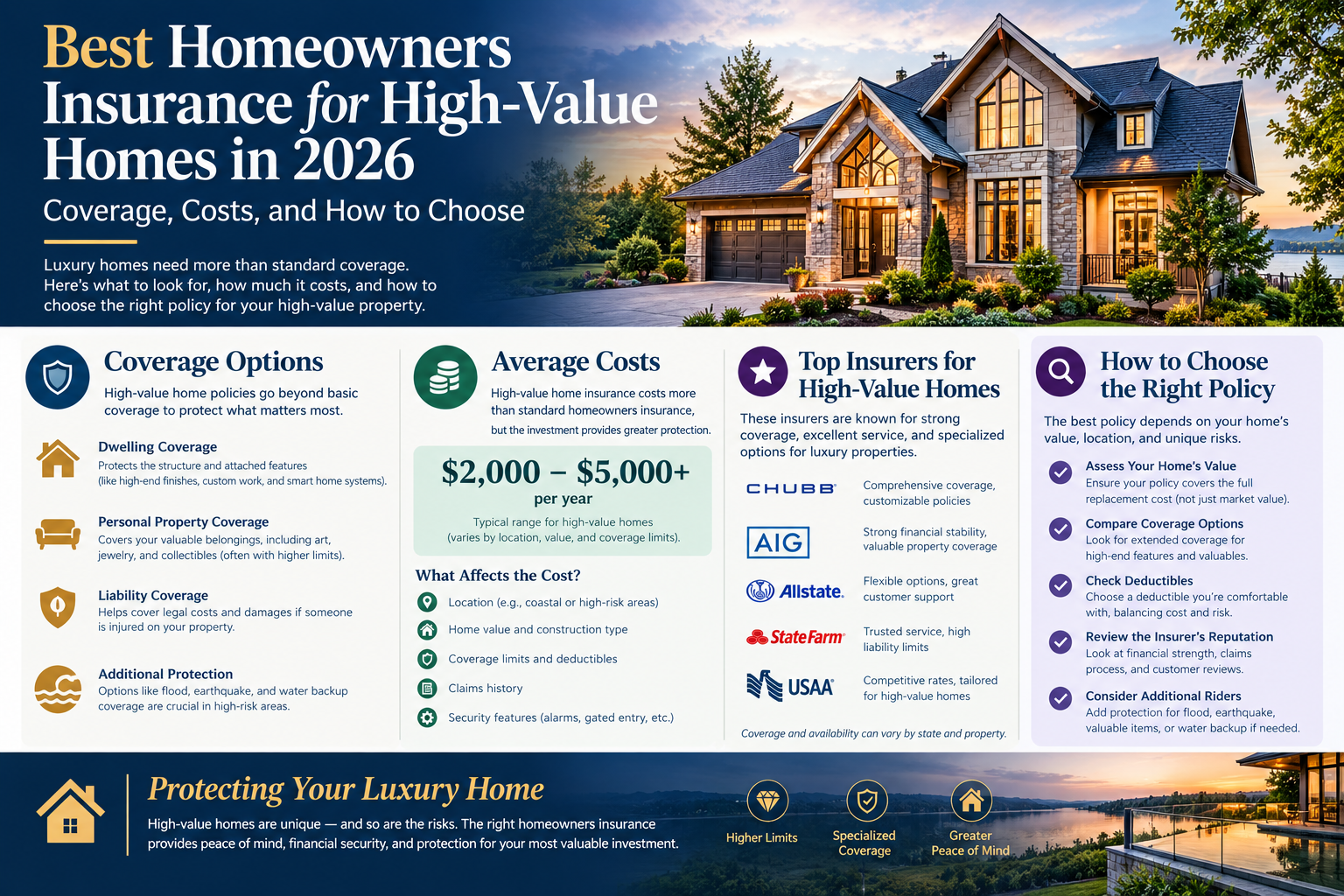
High-value homeowners insurance is designed for properties whose rebuilding needs, contents, and risks exceed the assumptions built into a standard home policy. A home may qualify as high value when its dwelling replacement cost surpasses conventional coverage limits, even if its market value is not unusually high. Location, square footage, custom architecture, premium materials, specialized craftsmanship, and difficult access can all increase reconstruction costs. A large estate may also include guesthouses, detached garages, pools, equestrian facilities, studios, security buildings, or other structures requiring separate and carefully coordinated protection.
The property itself is only part of the calculation. High-value residences often contain fine art, jewelry, antiques, wine, collectibles, designer furnishings, or equipment that standard policies cover only up to restrictive sublimits. Smart-home systems, renewable-energy installations, specialized heating and cooling, and high-end landscaping can also make repairs more complex. In 2026, severe storms, wildfire, flooding, theft, cyber threats, construction-cost inflation, labor shortages, and longer rebuild timelines are influencing underwriting and claims decisions. These conditions can increase both the likelihood of loss and the expense and duration of restoring a property.
Specialized coverage should therefore be evaluated by its settlement provisions, service model, and ability to respond to unusual losses, not only by its premium. Guaranteed replacement cost may pay the full amount needed to rebuild when covered expenses exceed the stated limit, while extended replacement cost provides an additional percentage above that limit. Agreed-value coverage can establish a predetermined amount for qualifying personal property, reducing disputes after a covered loss. Broader protection may include fewer exclusions, higher or scheduled limits, landscape and ordinance-and-law coverage, and more flexible loss settlement.
Many insurers serving affluent households also provide dedicated claims professionals, vetted contractors, preventative inspections, wildfire mitigation guidance, water-leak detection, cybersecurity support, and other risk-management services. The appropriate policy depends on the home’s construction, geographic exposure, collections, technology, and the household’s lifestyle. Comparing the insurer with the lowest premium alone can leave important assets, structures, or rebuilding requirements inadequately protected.
Start with dwelling protection based on a detailed replacement-cost estimate. Reconstruction pricing reflects current labor, materials, specialty craftsmanship, debris removal, and code requirements; purchase price and tax-assessed value may include land or outdated assumptions and therefore may not indicate rebuilding cost. Compare standard replacement cost with extended replacement cost, which adds a percentage above the limit, and guaranteed replacement cost, which may cover the full amount needed subject to policy conditions.
Review other-structures limits for guesthouses, detached garages, pools, gates, barns, tennis courts, and outdoor kitchens. Personal property protection should address jewelry, fine art, antiques, collectibles, wine, firearms, electronics, designer clothing, and other high-value possessions. Standard sublimits can be inadequate. Ask whether scheduled items require appraisals, receipts, photographs, or updated valuations, and compare agreed-value endorsements that settle covered losses at a predetermined amount.
Liability protection should account for substantial assets, premises risks, swimming pools, domestic employees, and staff-related injuries or disputes. Compare excess liability or umbrella insurance, including its required underlying limits and exclusions. Valuable additions may include identity-theft assistance, equipment-breakdown coverage, service-line failures, water-backup protection, matching of undamaged materials, landscaping, refrigerated products, and property used in a home office.
Compare temporary living expenses, loss-assessment coverage, ordinance-or-law protection, and coverage for newly acquired property. Then examine exclusions and limits, particularly for flood, earthquake, landslide, mold, wear and tear, vacancy, short-term rentals, business activity, and maintenance-related damage; these may require separate policies or endorsements.
Finally, compare deductibles, sublimits, endorsements, valuation methods, and claim-settlement language rather than headline coverage amounts alone. Confirm how the insurer handles partial damage, matching materials, depreciation, contractor selection, and disputes over scope. A policy with a lower premium may provide less practical protection if its exclusions are broad, its limits are restrictive, or its reconstruction assumptions are not regularly updated.
High-value home insurance premiums in 2026 depend primarily on the cost to rebuild the property, not its market value. Replacement cost estimates labor, materials, architectural features, and current construction prices; they generally exclude the land. Consequently, a luxury home can carry a substantial premium even when its location’s land value is not included in the rebuild calculation. Insurers also assess the ZIP code, local labor costs, wildfire or hurricane exposure, construction type, roof age, prior claims, occupancy, additional structures, valuables, liability limits, and required underwriting inspections.
Custom features can increase both coverage needs and rates. Scheduled jewelry, art, collectibles, pools, waterfront exposure, historic construction, imported finishes, elevators, generators, and extensive landscaping may require higher limits or specialized endorsements. A carrier may also consider whether the residence is occupied year-round, seasonally, or by household staff. Security systems, protective devices, and maintenance records can offset some costs, particularly when they reduce theft, fire, water, or weather-related risks.
Deductible selection significantly affects affordability. A higher all-peril deductible usually lowers the annual premium but increases the amount paid after a covered loss. Wind, hail, and hurricane deductibles may be percentage-based, calculated from the dwelling limit rather than a fixed dollar amount. Policyholders should evaluate their ability to absorb these expenses before choosing a larger deductible.
Potential discounts may apply for central-station alarms, fire suppression systems, monitored leak detection, impact-resistant roofing, backup generators, gated access, updated electrical and plumbing systems, bundled policies, and loss-prevention inspections. However, rates vary substantially by state, carrier, property characteristics, and underwriting rules, so individualized quotes are essential. Compare annual premium and deductible exposure alongside coverage limits, exclusions, insurer financial strength, claims service, policy flexibility, and the policy’s total risk-management value. The lowest price may provide less protection if it imposes restrictive exclusions or inadequate limits for rebuilding and personal assets.
Selecting insurance for a high-value home should begin with a structured assessment rather than a quick price comparison. An independent broker or private-client specialist can identify risks associated with custom construction, historic features, extensive grounds, staff, collections, and multiple residences. Before requesting quotes, gather architectural plans, renovation records, roof and major-system updates, security details, professional appraisals, and a current inventory of valuable possessions. This documentation helps insurers calculate appropriate limits and reduces delays when coverage is underwritten or a claim is filed.
Compare financially stable insurers by examining more than premiums. Read the policy wording, including replacement-cost provisions, exclusions, water and mold limitations, matching requirements, deductibles, and settlement procedures. Consider the insurer’s claims reputation, risk-prevention resources, inspection process, and service model. A dedicated private-client team, coordinated contractors, emergency response, and access to knowledgeable claims professionals may provide meaningful value for a complex property. Financial strength ratings can also help indicate an insurer’s ability to respond after a widespread catastrophe.
Obtain a professional replacement-cost appraisal and review the policy at least annually or every two years. Reassess it after renovations, major purchases, acquisitions, inflation, changes in occupancy, or alterations to household operations. Create a photo and video inventory of rooms, structures, furnishings, art, jewelry, equipment, and other possessions. Store receipts, appraisals, serial numbers, and copies of the inventory securely in encrypted cloud storage or another location separate from the home. Update scheduled-item values when market prices change, and retain records of roof inspections, maintenance, upgrades, and preventive work.
Coordinate the primary policy with umbrella liability and, where applicable, flood, earthquake, excess flood, aviation, watercraft, or other specialty coverage. Confirm that limits align and that exclusions do not create gaps between policies. If damage occurs, notify the insurer promptly, make only necessary temporary repairs to prevent further loss, preserve damaged materials and other evidence when safe, photograph conditions, and maintain clear communication with the adjuster. A practical decision checklist should balance protection breadth, exclusions, deductibles, service quality, insurer stability, and long-term affordability—not price alone.