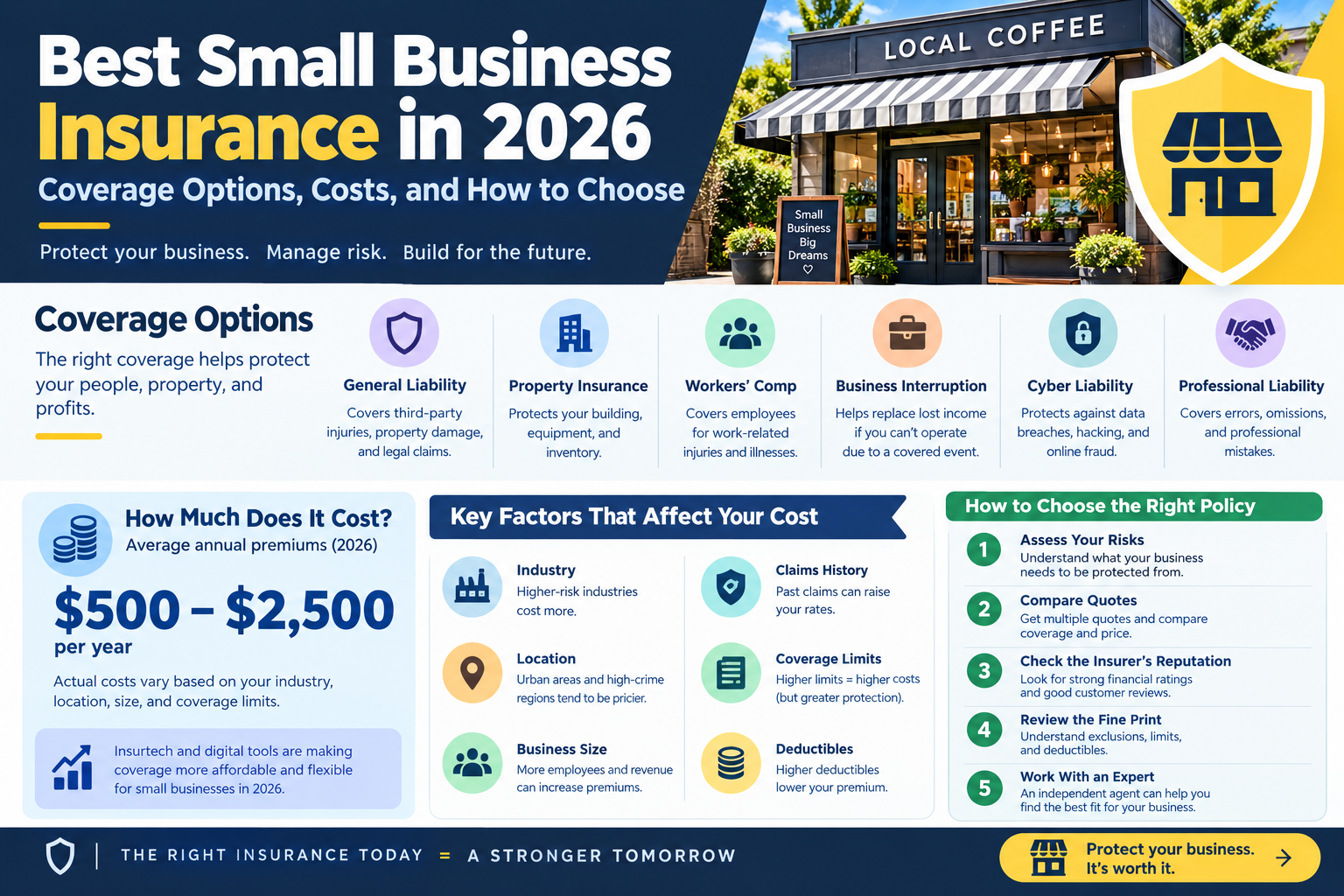
Small business insurance is a group of policies designed to protect a company from financial losses that can result from accidents, property damage, lawsuits, cyber incidents, employee injuries, theft, and interruptions to normal operations. Rather than relying on one broad contract, a business may combine several types of coverage to address its particular exposures. Common examples include general liability insurance, commercial property insurance, workers’ compensation, commercial auto coverage, professional liability insurance, and cyber insurance.
There is no single best policy for every business. A retailer with a storefront, a technology consultant working remotely, and a construction contractor face substantially different risks. Industry, location, business size, number of employees, customer interactions, equipment, company vehicles, leased premises, and contractual obligations can all affect the coverage a company needs. Business owners should also consider whether clients, landlords, lenders, or regulators require specific policies or minimum limits.
In 2026, a competitive insurance provider should offer coverage limits that match realistic loss scenarios, flexible policy packages, and endorsements tailored to specific industries. Clear explanations of exclusions are equally important, since a policy’s limitations can be as significant as its listed benefits. Other factors include responsive claims service, strong financial stability, convenient digital tools for obtaining certificates or managing policy documents, and pricing that reflects the company’s actual risk rather than relying only on broad business categories.
Some insurance is legally required, although requirements vary by jurisdiction and business structure. Workers’ compensation is commonly mandatory when a company has employees, while commercial auto insurance may be required for business-owned vehicles. General liability, professional liability, property, and cyber coverage are often optional, but they may be required by a contract or strongly advisable based on the company’s activities. Comparing these options involves reviewing protection, exclusions, limits, deductibles, service quality, and total cost. The sections that follow explain common policies and comparison criteria without presenting one universal insurer as the right choice for every company.
Small businesses should compare insurance policies according to their operations, contracts, assets, and legal obligations. General liability insurance typically covers third-party bodily injury, property damage, and advertising injury claims. It is especially relevant to retailers, contractors, restaurants, and businesses that serve customers on-site. Common exclusions include professional errors, intentional acts, employee injuries, and damage to the insured’s own property.
A business owner’s policy (BOP) commonly combines general liability with commercial property coverage, often at a lower combined premium. It may suit smaller offices, shops, and service businesses, although eligibility, limits, and covered causes of loss vary. Commercial property insurance separately protects buildings, inventory, furniture, tools, and equipment from covered events; flooding, earthquakes, wear, and poor maintenance may be excluded.
Professional liability, also called errors and omissions insurance, is important for consultants, designers, accountants, technology firms, and other providers of advice or specialized services. It can address claims involving negligence, inaccurate advice, missed deadlines, or professional mistakes, but usually excludes intentional wrongdoing, known disputes, and bodily injury or property damage better handled by other policies.
Workers’ compensation insurance generally covers employees’ work-related injuries and illnesses where required by law. Commercial auto insurance is needed for vehicles used for deliveries, transportation, sales calls, or other business purposes; personal policies may deny such claims. Business interruption coverage can replace lost income and certain extra expenses after a covered disruption, but waiting periods, coverage limits, and the requirement for physical property damage deserve careful review.
Specialized protection may also be appropriate. Cyber liability insurance can help with data breaches, ransomware, notification costs, and certain claims, subject to security-control exclusions. Product liability insurance addresses harm allegedly caused by sold or manufactured goods. Employment practices liability insurance covers claims such as discrimination, harassment, or wrongful termination, while directors and officers coverage addresses alleged management decisions. Equipment breakdown insurance protects against sudden mechanical or electrical failures, inland marine insurance covers property in transit or at temporary locations, and liquor liability insurance may be essential for businesses serving alcohol. Policy definitions, deductibles, exclusions, sublimits, and claims-made reporting requirements should be compared carefully.
Start by requesting quotes from several licensed insurers or reputable independent agents. Give each provider the same information so the comparison is meaningful, including annual revenue, payroll, property values, claims history, services offered, operating locations, subcontractor use, and business vehicles. Differences in quoted premiums may reflect different assumptions rather than better value, so ask providers to confirm the details used in underwriting.
Evaluate more than the premium. Compare deductibles, per-occurrence and aggregate limits, covered causes of loss, exclusions, waiting periods, endorsements, renewal terms, and claims procedures. Determine whether property is insured at replacement cost or actual cash value, since depreciation can substantially affect a claim payment. Also ask how quickly the insurer can issue certificates of insurance and whether online certificate services are available when landlords, clients, or contractors request proof of coverage.
Assess the provider as carefully as the policy. Verify licensing status with the appropriate state regulator, review complaint information, and consider the insurer’s financial-strength ratings. Customer service reputation and experience in the relevant industry can be especially important when claims involve specialized equipment, professional services, regulated work, or unusual risks. An independent agent may help explain differences among carriers, but confirm which insurers the agent represents and how compensation works.
A business owner may reduce costs by bundling general liability and commercial property insurance in a business owner’s policy (BOP), when the business meets eligibility requirements. However, a BOP does not automatically replace specialized coverage such as professional liability, workers’ compensation, cyber insurance, commercial auto, or employment practices liability insurance. Read the policy, endorsements, and declarations page, then identify gaps between landlord or client requirements and actual protection. Confirm whether freelancers, contractors, remote workers, inventory, digital assets, and activities at multiple locations are covered. Before choosing a policy for 2026, request written answers to unresolved questions and review renewal conditions, because a low initial quote may not remain the most suitable option after terms, limits, and exclusions are considered.
Selecting appropriate protection should begin with a structured risk inventory, not a premium comparison. List customer-facing activities, valuable property, contractual obligations, cyber exposure, employee-related risks, transportation needs, and circumstances that could interrupt income. Review how each risk could affect the business, its customers, employees, and commercial partners. This process helps identify relevant policies, such as general liability, commercial property, workers’ compensation, commercial auto, cyber insurance, professional liability, and business interruption coverage.
Set coverage limits according to realistic worst-case losses rather than choosing the least expensive premium. Consider the cost of rebuilding, replacing equipment, defending a claim, meeting contractual requirements, and continuing payroll during an interruption. Deductibles can help balance affordability and protection when the business can comfortably absorb the selected amount. Strong risk-management practices, including employee training, written safety procedures, regular equipment maintenance, access controls, backups, and incident-response planning, may also reduce claims and improve insurability.
There are legitimate ways to manage insurance costs without removing necessary protection. Ask whether eligible policies can be bundled, improve workplace safety, install physical security and cybersecurity controls, and maintain accurate payroll, sales, inventory, and revenue records. Compare quotes at renewal, confirm that insurers are evaluating current information, and ask about industry-specific discounts, risk-control credits, or payment options. A lower premium is not a saving if exclusions, inadequate limits, or coverage gaps leave the business exposed to a severe loss.
Schedule a review at least annually and whenever the business changes significantly. Reassess coverage after hiring employees, purchasing equipment, signing a lease, adding products or services, expanding into another state, acquiring vehicles, storing customer data, or experiencing substantial revenue growth. Before purchasing, consult a licensed insurance professional, verify state-specific requirements, and document the coverage decisions, limits, deductibles, exclusions, and reasons supporting them. Keep policy documents, certificates, inventories, and claims contacts accessible so protection remains aligned with operations.