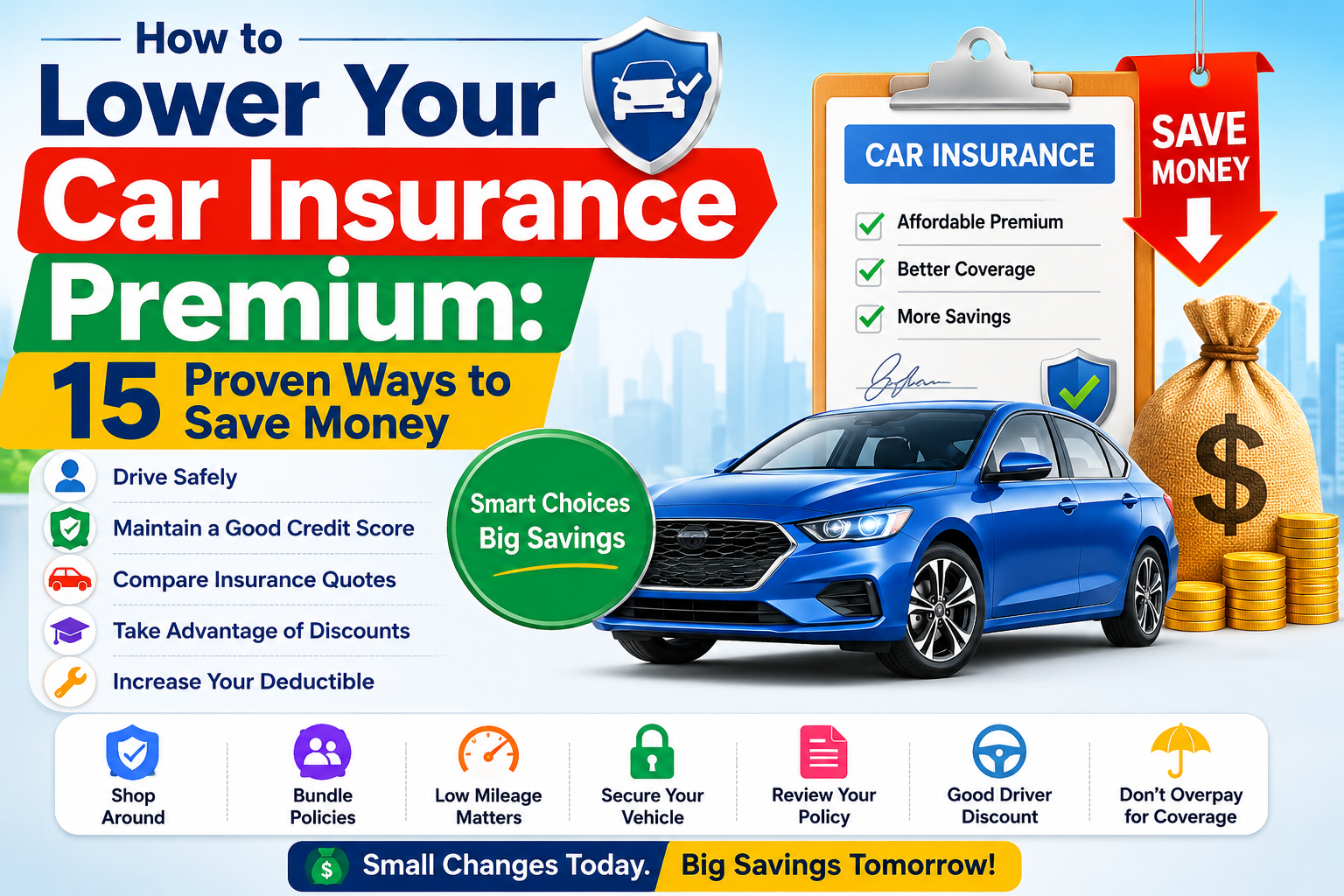
Understanding Car Insurance Premiums
Car insurance premiums represent the amount of money a policyholder pays to maintain their coverage. This payment is typically made on a monthly or annual basis and is determined by a variety of factors. Understanding these factors is essential for individuals looking to manage and potentially reduce their insurance costs.
One of the primary elements influencing the cost of a car insurance premium is the type of coverage selected. Different coverage options, such as liability, collision, and comprehensive insurance, come with varying levels of protection and thereby affect the premium amount. For instance, comprehensive coverage generally leads to higher premiums due to the extensive protection it offers against a wide range of risks.
Another critical aspect is the deductible amount chosen by the policyholder. The deductible is the amount an individual agrees to pay out-of-pocket before their insurance kicks in. A higher deductible usually results in a lower premium, as the policyholder assumes more financial responsibility in case of a claim. Conversely, selecting a lower deductible often leads to increased monthly premiums.
Individual risk profiles significantly influence car insurance premiums as well. Factors such as the driver’s age, driving record, credit history, and even the type of vehicle owned are assessed by insurance companies when calculating risk. Young or inexperienced drivers typically face higher premiums due to their perceived risk, while individuals with a clean driving record may qualify for discounts that lower their overall costs.
Insurance companies utilize complex algorithms and statistical data to evaluate these factors when determining premiums. By analyzing vast amounts of information, they can better predict the likelihood of a claim being filed, leading to more accurate premium pricing. Understanding how these variables interact helps consumers make informed choices regarding their car insurance and explore strategies for reducing their premiums.
Shop Around for the Best Rates
When it comes to managing your car insurance costs, shopping around for the best rates is crucial. Comparing quotes from different insurance providers allows you to identify the most competitive options available to you, which can significantly impact your overall premium costs. It is essential to understand that not all insurance companies offer the same prices or coverage options, making it paramount for consumers to conduct thorough research.
Utilizing online comparison tools can be an effective way to streamline the process of gathering multiple quotes. Many websites allow users to input their information once and receive quotes from various insurers. These platforms often provide a side-by-side comparison of coverage options and prices, making it easier to evaluate which provider meets your needs effectively. Additionally, some insurance companies may offer online discounts for those who purchase policies directly through their websites, further reducing your premium.
Directly visiting insurance providers’ websites can also yield beneficial results. Many companies allow potential customers to request free quotes by filling out brief online forms. It may be helpful to provide accurate information regarding your vehicle, driving history, and coverage preferences to ensure that the quotes received are reflective of your situation. Once you have gathered these quotes, take the time to analyze the coverage differences, deductibles, and the reputation of each insurer. Reading reviews and research on customer service can further inform your decision and help you choose a reliable company.
Remember, the goal of shopping around is not just to find the lowest premium, but to secure a policy that offers a suitable balance between coverage and cost. By applying the strategies outlined above, you can ensure that you maximize your chances of obtaining the best possible rates, ultimately contributing to greater financial savings on your car insurance.
Utilize Discounts Offered by Insurers
One of the most effective ways to lower your car insurance premium is by taking advantage of the various discounts that insurance companies offer. Understanding the types of discounts available can significantly reduce your costs, making it essential for policyholders to inquire about and qualify for them.
First and foremost, many insurers provide a multi-policy discount. This incentive is typically offered to customers who purchase multiple insurance policies, such as combining auto and home insurance. By bundling these policies, you can enjoy substantial savings, often ranging from 10% to 25% off your total premium.
Additionally, good driver discounts are frequently awarded to those with a clean driving record. Insurers recognize the lower risk associated with responsible driving habits and reward drivers who have not received any traffic violations or claims within a specified period, resulting in lower premiums. Policyholders should ensure they communicate their good driving history to their insurers to capitalize on this discount.
For students, many insurance companies offer specialized discounts aimed at encouraging responsible behavior. These student discounts might be available for those who maintain a certain grade point average or have completed driver education courses. Such incentives not only help students save on their premiums but also promote safe driving practices among younger drivers.
Other discounts may include those for low mileage, vehicle safety features, and affiliations with certain organizations or companies. Customers are encouraged to explore all options and verify their eligibility for discounts. It is advisable to inquire about every potential discount when obtaining or renewing a policy.
By proactively seeking out these discounts, policyholders can significantly impact their overall auto insurance expenses. Engaging in discussions with insurance agents and completing the necessary paperwork can unlock potential savings that are often overlooked.
Increase Your Deductible
One of the most straightforward ways to lower your car insurance premium is to opt for a higher deductible. The deductible is the amount you agree to pay out-of-pocket before your insurance coverage kicks in for a claim. By increasing your deductible, you are essentially taking on more risk, which insurance companies often reward with lower premium costs.
For example, if you currently have a deductible of $500 and you raise it to $1,000, your insurance provider may significantly reduce your monthly premium. This change is appealing for financially secure individuals who are capable of covering the higher deductible in the event of an accident. However, it’s important to carefully consider your financial situation before making this decision.
There are several pros and cons associated with increasing your deductible. On the positive side, a higher deductible significantly reduces insurance costs, which can lead to substantial savings over time. For many drivers, this is an effective strategy for affordability, particularly for those who have a solid driving record and are less likely to file claims. Furthermore, it encourages responsible driving behavior, as policyholders may be more cautious when they know they have a higher financial stake.
On the flip side, there are potential downsides to consider. If an accident does occur, you will need to pay the increased deductible amount upfront, which can be burdensome for some families or individuals. This factor can create financial strain, particularly if your budget is tight. Therefore, it is crucial to evaluate your ability to pay a higher deductible when selecting your policy.
Finding the right balance between affordability and risk is key when choosing your deductible. A deductible that is too high may lead to financial hardship in the case of an accident, while one that is too low can result in unnecessarily high insurance payments. Therefore, reviewing your various options and determining a deductible that fits comfortably within your financial framework is vital.
Maintain a Clean Driving Record
One of the most significant factors influencing car insurance premiums is the driver’s history. Insurance companies often review driving records to assess risk, and a clean driving history can lead to lower rates. Conversely, a record that shows multiple accidents or traffic violations can substantially increase premiums. When evaluating potential customers, insurers categorize those with a strong record as lower risk, making them eligible for more favorable insurance rates.
Accidents, even minor ones, can have lasting impacts on insurance premiums. A single at-fault accident can result in a surge in rates for several years following the incident. Similarly, traffic violations such as speeding tickets, DUI charges, or reckless driving convictions can signal to insurers that a driver poses a higher risk. Therefore, maintaining a clean driving record should be a priority for anyone looking to minimize their car insurance costs.
To help ensure a safe driving record, it is essential to adopt safe driving practices. This includes obeying traffic laws, respecting speed limits, and avoiding distractions such as mobile phone use while driving. Additionally, participating in defensive driving courses can enhance awareness and skill behind the wheel, further preventing future violations and accidents. Some insurance companies even offer discounts for completing such training, which can directly reduce premiums.
In addition to safe driving, regular vehicle maintenance also plays a role in ensuring safety on the road. By routinely checking brakes, tires, and lights, drivers can help avoid breakdowns or incidents caused by vehicle failure. All these diligent efforts contribute positively to a driver’s history, allowing for better rates in the long run.
By focusing on maintaining a clean driving record and consistently practicing safe driving habits, individuals can not only protect their well-being but can also enjoy the financial benefits of reduced car insurance premiums.
Choose the Right Vehicle for Insurance Savings
The type of vehicle you choose has a significant impact on your car insurance premium. Insurers evaluate numerous factors when determining rates, and the make, model, and age of your vehicle play a crucial role in this assessment. Generally, vehicles that are less expensive to repair or replace will incur lower insurance costs. For instance, compact cars often cost less to insure than luxury or sports cars, due to the lower likelihood of high repair costs. Additionally, vehicles known for their safety ratings tend to attract better insurance rates because they reduce the risk of injury in accidents.
Moreover, certain car models are statistically linked to fewer claims. Insurers compile data on past incidents, and vehicles that are commonly involved in accidents or theft may lead to higher premiums. Therefore, choosing a car from a category that tends to maintain a good safety record, such as sedans, can help in securing a lower insurance rate. Families often opt for SUVs or minivans, which are also associated with moderate insurance costs, especially those equipped with advanced safety features.
Furthermore, vehicles that are equipped with modern technology, such as anti-theft devices and advanced driver-assistance systems, can provide additional discounts on premiums. These features reduce the risk of theft and accidents, showcasing a responsible approach to vehicle ownership that insurers appreciate. When considering a new vehicle, it is advisable to research models that are typically cheaper to insure, as this can lead to significant long-term savings. Overall, a thorough understanding of how vehicle type affects insurance rates enables consumers to make informed purchasing decisions that align with their financial goals.
Take Advantage of Usage-Based Insurance Programs
Usage-based insurance (UBI) programs have emerged as a viable option for drivers aiming to reduce their car insurance premiums. These programs assess individual driving habits rather than relying solely on traditional metrics like age, location, or vehicle type. By analyzing data collected through telematics devices or mobile apps, insurance companies can tailor premiums to reflect actual driving behavior.
For low-mileage drivers, usage-based insurance can be particularly advantageous. These programs typically monitor factors such as distance driven, speed, braking, and acceleration patterns. As a result, drivers who demonstrate safe and responsible driving practices can benefit from lower rates. For instance, a driver who travels less than 5,000 miles per year and maintains a responsible driving record may find their premiums significantly reduced through a UBI program.
An example of a popular usage-based insurance program is Progressive’s Snapshot, which tracks driving behavior and adjusts premiums accordingly. Similarly, State Farm offers its Drive Safe & Save program, where the company’s mobile app monitors driving patterns, offering potential discounts based on safe driving habits. Both programs effectively incentivize low-mileage drivers to save on their insurance costs.
To enroll in a usage-based insurance program, individuals can typically visit their insurance provider’s website or contact their agent. The enrollment process is straightforward; drivers may need to install a telematics device in their vehicle or download a mobile application to begin tracking their driving behavior. It is essential for prospective participants to read the terms and conditions carefully, understanding how their driving data will be utilized and the specific metrics that may impact their premiums.
In summary, usage-based insurance programs present an appealing opportunity for low-mileage drivers to obtain lower premiums by promoting safe driving practices. By taking advantage of these programs, drivers can enjoy savings while fostering responsible habits behind the wheel.
Bundle Your Policies for Additional Savings
One of the most effective strategies to reduce your car insurance premium is by bundling your auto insurance with other types of insurance policies, such as homeowners or renters insurance. Insurance companies often offer substantial discounts to customers who choose to combine their policies, which can lead to significant savings over time.
When bundling, it is essential to assess the types of coverage you currently have and how they correlate with each other. For instance, if you already have a homeowners policy, you may find that your auto insurer offers a lower premium when you add your vehicle to the existing policy. This is because insurers reward loyal customers who consolidate their business, leading to lower overall administrative costs.
Additionally, bundling allows for more streamlined management of your insurance needs. Instead of dealing with multiple companies and policies, you can manage everything under one roof, simplifying the payment process and potentially allowing greater insight into your total coverage. This consolidated approach not only saves money but can also lead to more straightforward customer service interactions.
Before proceeding with bundling, it is advisable to shop around and compare quotes from different providers. Not all insurance companies will provide the same discount for bundled policies, so it’s beneficial to evaluate your options thoroughly. Pay special attention to the overall coverage limits and the deductibles when making comparisons to ensure that the bundled policy meets your needs without sacrificing quality for cost.
In conclusion, bundling your auto insurance with other policies is a smart way to increase your savings. By taking informed steps and evaluating your options, you can potentially reduce your car insurance premiums significantly while enjoying the convenience of managing multiple policies in one place.
Regularly Review and Update Your Coverage
One of the most crucial steps in managing your car insurance costs is to regularly review and update your coverage. Life circumstances evolve over time, and so do your insurance needs. Factors such as changes in your driving habits, marriage status, or even moving to a different location can significantly affect your insurance requirements. By reassessing your policy, you can ensure that you have adequate coverage while also identifying any areas where you may be overinsured, ultimately leading to lower premiums.
It is recommended to conduct this review at least once a year or whenever there are significant changes in your life. During the review, consider the coverage levels you currently have. For instance, if you own an older vehicle that has depreciated in value, you might want to adjust your coverage to reflect its current worth. This could include decreasing collision and comprehensive coverage since the cost of premiums may not be justified compared to the potential payout in the event of a claim.
Moreover, as you accumulate safe driving records, you may become eligible for discounts. Many insurance providers offer incentives for drivers with clean records, which can lead to lower premiums. Similarly, switching to a different insurance company may yield better rates. Different insurers offer various discounts and benefits, so it is worth comparing policies regularly.
Finally, stay informed about any changes in laws or your insurance provider’s offerings. New discounts or adjustments in policy structures could be beneficial in reducing your overall expenses. By regularly reviewing and updating your car insurance coverage, you can tailor your policy to fit your current needs and financial situation, ensuring that you are not paying more than necessary for your insurance premium.