Understanding Auto Insurance
Auto insurance is a critical financial product designed to protect vehicle owners from potential losses associated with accidents, theft, and other damages. It serves as a safety net, providing peace of mind to drivers by covering the costs incurred in various incidents involving their vehicles. The importance of auto insurance cannot be overstated; not only is it often legally required, but it also safeguards an individual’s financial stability against unforeseen events.
An auto insurance policy typically consists of several key components, including liability coverage, collision coverage, and comprehensive coverage. Liability coverage is crucial as it protects the policyholder from legal claims arising from injuries or damages inflicted on others during an auto accident. Collision coverage, on the other hand, covers the costs of repairing one’s own vehicle, regardless of fault. Meanwhile, comprehensive coverage addresses non-collision-related incidents, such as theft or vandalism.
There are various types of auto insurance coverage available in the market, catering to the diverse needs of vehicle owners. For instance, uninsured/underinsured motorist coverage is an essential type of protection for those involved in accidents with drivers who lack adequate insurance. Additionally, personal injury protection (PIP) helps cover medical expenses for the policyholder and passengers, regardless of who is at fault. It is crucial for car owners to carefully consider their coverage options and assess their individual needs to select the most suitable policy.
In summary, understanding the fundamentals of auto insurance, its importance, and the range of available coverage types can empower vehicle owners to make informed decisions. When looking into car insurance options, one should evaluate both coverage levels and premiums to ensure sufficient protection and financial security on the road.
Criteria for Selecting Auto Insurance Companies
When evaluating potential auto insurance companies, it’s essential to consider several key factors that can significantly impact your experience and financial protection. Understanding these criteria can help consumers choose a provider that aligns with their specific needs and preferences.
One of the foremost considerations is the financial stability of the insurance company. A financially sound provider is more likely to meet its obligations when it comes time for claims. Consumers might want to look at ratings from independent agencies such as A.M. Best or Standard & Poor’s. These ratings indicate the company’s ability to withstand economic downturns and pay out claims, which is a crucial aspect of selecting an auto insurance provider.
Next, customer service ratings should also play a significant role in the decision-making process. High-quality customer service is vital, as it influences how smoothly claims are handled and how responsive the company is to inquiries. Online reviews, consumer reports, and surveys from sources like J.D. Power can provide valuable insights into customer satisfaction and service levels of different insurers.
The range of coverage options available is another important factor. Consumers should assess whether the providers offer the necessary coverage types, such as liability, collision, comprehensive, and health insurance options. Additionally, consideration of add-ons like roadside assistance, rental car reimbursement, or customized coverage can better tailor a policy to meet individual preferences.
Finally, premium pricing is a pivotal aspect of selecting an auto insurance company. While it is tempting to choose the cheapest option, consumers should also consider the balance between cost and coverage. Comparing quotes from multiple insurers helps in understanding average rates in the market and ensures that individuals are not underinsured while saving on premiums. Structured comparisons will provide a clearer picture of what companies can offer against their pricing.
By evaluating these key factors, consumers are better equipped to choose an auto insurance provider that offers both quality coverage and a satisfactory customer experience.
Overview of the Best Auto Insurance Companies for 2026
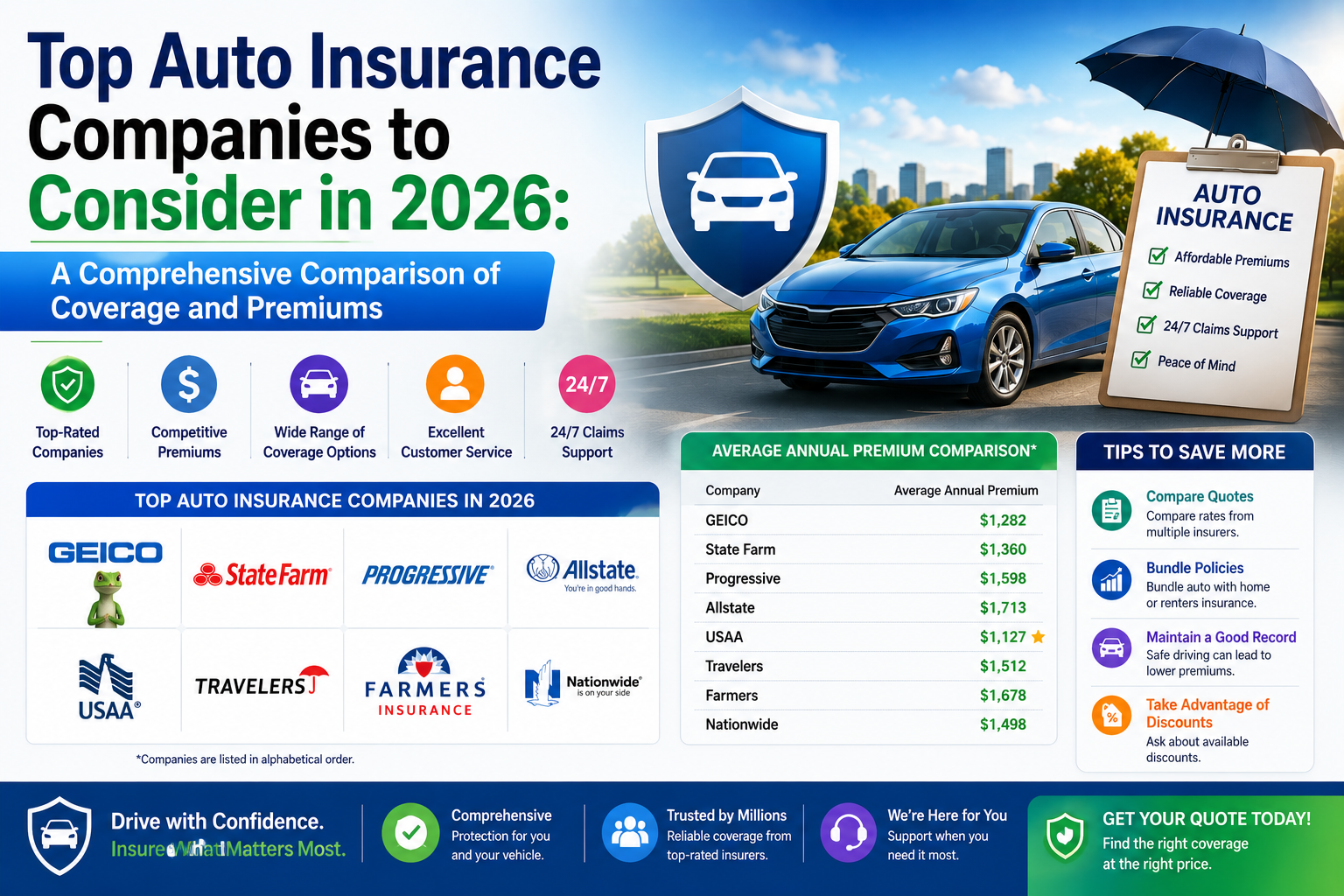
As we look to the future of automotive protection, several auto insurance providers are emerging as leaders poised to offer exceptional services in 2026. These companies have established strong reputations based on customer satisfaction, innovative coverage options, and competitive premiums. Here, we will introduce a selection of the top auto insurance companies that are anticipated to excel in the coming year.
One notable contender is Geico, renowned for its extensive range of coverage options and user-friendly digital tools. Geico’s commitment to technology not only facilitates customer interactions but also enhances the claims process, making it a top choice for policyholders seeking efficiency and reliability.
Another significant player is Progressive. Recognized for its flexible coverage plans that cater to varied customer needs, Progressive offers unique features such as usage-based insurance, which provides discounts based on driving habits. This adaptive approach has long appealed to younger drivers and those looking for customizable policies.
State Farm also deserves mention, particularly for its exceptional customer service ratings. Known for its extensive agent network, State Farm provides personalized assistance that can be invaluable when navigating policies and claims. Their focus on community engagement and customer loyalty sets them apart in the competitive auto insurance landscape.
Additionally, Allstate is another key player, distinctive for its comprehensive coverage options and extensive benefits that include accident forgiveness programs. Allstate’s emphasis on making insurance accessible and understandable resonates well with a broad range of drivers, thereby enhancing its standing in the industry.
Lastly, USAA, while limited to military members and their families, continues to excel with top-tier service and competitive rates. Its unwavering commitment to providing tailored solutions for service members is a significant advantage that reinforces its reputation.
The insurance landscape is dynamic, with each of these companies evolving to meet the emerging needs of consumers. Their investment in innovation, customer service, and tailored offerings positions them as the leading auto insurance providers to consider in 2026.
Coverage Options Offered by Leading Insurers
When selecting an auto insurance policy, understanding the array of coverage options available is paramount. Leading insurers in 2026 offer a variety of standard and optional coverages tailored to meet the diverse needs of their customers. Typically, the standard coverage types include liability, collision, and comprehensive insurance.
Liability coverage is essential, as it protects the insured against claims resulting from injuries or damages to third parties. Most insurance providers offer varying limits for bodily injury and property damage liability, allowing consumers to choose based on their preferences and local legal requirements. Additionally, collision coverage pays for damages to a policyholder’s vehicle resulting from an accident, regardless of fault, while comprehensive coverage extends protection to non-collision incidents such as theft, vandalism, or natural disasters.
In addition to these fundamental protections, many insurers provide optional add-ons. For example, roadside assistance is a valuable addition that offers peace of mind for unexpected breakdowns. Similarly, uninsured/underinsured motorist coverage can be crucial, as it secures the insured when involved in an accident with a driver lacking sufficient insurance.
Another option worth considering is gap insurance, particularly for those purchasing a new vehicle. This coverage is particularly beneficial if the car is totaled, since it compensates the owner for the difference between the loan balance and the vehicle’s actual cash value.
To enhance flexibility, most prominent companies also enable customizable policies. This allows consumers to tailor their coverage by adding or removing certain elements based on their specific circumstances and risk tolerance. Each driver’s situation is unique, thus having the ability to modify a policy provides significant benefits in terms of both coverage and cost management.
In conclusion, when evaluating auto insurance options in 2026, prospective policyholders should carefully consider the range of coverage types offered by insurers. By assessing both the standard policies and optional add-ons, they can make informed decisions that align with their individual needs and financial situations.
Comparative Analysis of Premiums
When evaluating auto insurance, understanding the various premiums charged by different companies is crucial. Factors such as the type of coverage, driving history, location, and the make and model of the vehicle can significantly influence the insurance rates. In this analysis, we will explore the average costs for several types of coverage across some of the top auto insurance providers anticipated in 2026.
A comprehensive comparison indicates that liability coverage, which includes bodily injury and property damage, is typically the most affordable option. Average premiums for basic liability coverage can range from $500 to $1,000 annually, depending on the insurer and the state regulations. Insurers often provide varying rates based on the client’s driving records, credit scores, and personal circumstances.
Full coverage, which includes both liability and comprehensive/collision coverage, costs significantly more, with average premiums varying from $1,200 to $2,500 per year. Companies such as Geico, State Farm, and Progressive tend to offer competitive rates for full coverage, often appealing to younger or first-time drivers seeking to balance cost with protection.
Moreover, additional factors that influence premiums include the deductible amount chosen by the policyholder. Higher deductibles generally lead to lower monthly premiums, whereas lower deductibles result in higher premiums. Insurers assess risk differently, and terms of discounts—such as multi-policy or good driver discounts—also play a major role in determining the final premium amount.
As we navigate through the dynamic landscape of auto insurance in 2026, potential policyholders must consider their specific needs and compare quotes from various companies. This will ensure they select an option that aligns with their budget while providing sufficient coverage for their vehicles.
Customer Satisfaction and Reviews
In the competitive landscape of auto insurance, customer satisfaction plays a crucial role in determining the reputation of insurance providers. When evaluating the leading auto insurance companies, it is essential to consider their customer satisfaction ratings and reviews, as these often reflect the overall experience policyholders have with their insurers.
Consumer reports and independent surveys frequently assess various aspects of service, including claims handling, customer service, billing processes, and ease of communication. For instance, companies such as State Farm, GEICO, and Progressive are often highlighted for their strong customer service and efficiency in processing claims. Surveys conducted by organizations like J.D. Power and Consumer Reports provide valuable insights into consumer sentiment, indicating satisfaction levels across different demographics.
State Farm consistently ranks high in customer satisfaction, particularly for its responsiveness during the claims process. Many customers appreciate the ease of accessing policy information and receiving support through various channels, including online and mobile platforms. Conversely, some insurers may face criticism over lengthy claim processing times or customer service that is not readily accessible. This can significantly impact policyholders’ perceptions of their insurer.
Reviews on platforms like Trustpilot and Yelp also add a different dimension to understanding customer satisfaction. Here, consumers share firsthand experiences, highlighting both positive and negative interactions with their insurer. Analyzing these reviews can offer prospective customers a glimpse into potential experiences with specific auto insurance providers, contributing to more informed decision-making.
In summary, a deeper understanding of customer satisfaction ratings and reviews, garnered from consumer reports and independent surveys, is essential for anyone considering auto insurance in 2026. As the industry evolves, prospective clients should prioritize companies that not only offer competitive premiums but also maintain high rates of customer satisfaction, ensuring a more secure and supportive insurance experience.
Claims Process and Customer Support
The claims process is a critical component of auto insurance that can significantly influence a policyholder’s overall experience. When evaluating top auto insurance companies, it is essential to examine how straightforward and efficient their claims procedures are. A seamless claims experience not only reduces the stress associated with an accident but also serves as a strong indicator of a company’s commitment to customer satisfaction.
Most reputable auto insurance providers have established user-friendly systems for filing claims. Many companies now offer mobile apps that allow customers to report accidents and initiate claims directly from their smartphones. This accessibility can dramatically streamline the process. For instance, companies with intuitive digital platforms enable users to upload incident details and photos instantly, which can lead to quicker resolutions.
Moreover, the responsiveness of customer support teams plays a crucial role during the claims process. Efficient and compassionate representation can make a significant difference for policyholders who are often navigating stressful situations. It is advisable for consumers to look for companies that provide multiple channels of communication, including phone, email, and live chat options, allowing for flexible interaction based on customer preference.
Additionally, the availability of knowledgeable support staff can enhance the claims experience. Auto insurance companies that provide 24/7 support can help alleviate concerns at any time, offering guidance and reassurance throughout the claims process. Those interested in purchasing insurance should consider looking into customer reviews and satisfaction ratings related to the claims process, as these results often highlight the strengths and weaknesses of a company’s claims-handling capabilities.
In conclusion, assessing the claims processes and customer support services of auto insurance companies is vital for making an informed decision. A structured, user-friendly claims experience coupled with responsive customer service directly impacts policyholders’ contentment and trust in their insurer.
Trends in Auto Insurance for 2026
The auto insurance landscape is poised for significant transformation as we approach 2026. One of the most prominent trends is the increasing integration of technology into insurance policies. Advancements in telematics and artificial intelligence are revolutionizing how insurance companies assess risk and determine premiums. With telematics devices, insurers can monitor driving behavior in real-time, allowing for more accurate and personalized policy pricing. This shift toward technology-driven insurance enhances transparency and improves the customer experience.
Another emerging trend is the rise of usage-based insurance (UBI). This model charges premiums based on actual driving habits rather than general demographics. As consumers become more aware of their driving habits and seek more value in their insurance policies, UBI is expected to gain traction. This trend not only incentivizes safe driving but also caters to the growing demand for customizable insurance options that reflect individual usage patterns.
Consumer expectations are also evolving in the auto insurance sector. Modern consumers are increasingly seeking seamless digital interactions and instant service. This demand for convenience has prompted insurance companies to enhance their online platforms and mobile applications, making it easier for customers to manage their policies, file claims, and receive support. The push for better customer service is expected to further drive competition among auto insurers, leading to innovations in policy features and services.
In addition to these technological advancements, the industry must also adapt to regulatory changes and environmental concerns. Insurers are beginning to incorporate sustainability into their business models, as eco-friendly practices and products become essential for attracting environmentally conscious consumers. As these trends converge, the auto insurance industry will likely see a significant shift towards more efficient, personalized, and responsible coverage solutions by 2026.
Conclusion and Recommendations
In conclusion, selecting the right auto insurance is essential for protecting your vehicle and ensuring your financial security. Throughout this article, we have examined various auto insurance companies, highlighting their coverage options, premium rates, and customer service ratings for 2026. As the market evolves, making an informed choice can significantly impact your overall experience and satisfaction.
When considering auto insurance, it is crucial to evaluate your personal needs and circumstances. Factors such as your driving habits, the car you drive, and your budget should guide your decision-making process. For instance, if you drive frequently or have a higher risk profile, opting for a comprehensive plan with robust coverage limits may be beneficial, even if the premium is higher.
Additionally, consider the company’s reputation for customer service and claims handling. Researching customer reviews and ratings can provide valuable insight into how different insurers treat their clients and the efficiency of their claims processes. This information is particularly important as you want a provider who will be responsive and helpful when you need to file a claim.
Comparing multiple providers is recommended to find the best rates and coverage that suit your requirements. Use online tools to request quotes from different insurance companies, ensuring you analyze the fine print, including deductibles and coverage exclusions. It is also advisable to explore discounts for various factors such as safe driving records, bundling policies, or installing safety features in your vehicle.
As you navigate through your insurance options in 2026, remember that the optimal auto insurance policy is one that aligns with your unique needs and financial situation. By taking the time to research and compare your choices, you can find the right auto insurance coverage that offers you peace of mind on the road.