Introduction to Car Insurance in 2026
As we step into 2026, understanding car insurance becomes increasingly important for vehicle owners. With evolving regulations, technology, and market dynamics, the landscape of car insurance is witnessing notable changes. This insurance is crucial not only for compliance with legal requirements but also for protecting significant assets and ensuring peace of mind for drivers.
The significance of car insurance in 2026 cannot be understated. It functions as a safety net for motorists, covering costs associated with accidents, theft, and liability claims. Given the rising prices of vehicles and medical expenses, having comprehensive coverage is essential for safeguarding personal and financial interests. Additionally, car insurance serves to mitigate risks associated with unforeseen events, a factor that adds to its importance in personal financial planning.
Several factors influence insurance rates today, and they are expected to continue doing so into 2026. Among these factors are driving history, type of vehicle, geographic location, and individual risk profiles. Insurers assess these variables to determine premiums and coverage options tailored to each driver. Furthermore, technological advancements such as telematics are beginning to shape how insurers evaluate risk, leading to a more personalized insurance experience. As more data becomes available, rates could become more competitive, potentially impacting average costs significantly.
This introductory overview sets the stage for a detailed analysis of average car insurance costs across different states in 2026. Each state’s unique regulations, demographics, and risk factors contribute to diverse insurance landscapes. In the following sections, we will delve deeper into these average costs, providing insights into how they fluctuate and what vehicle owners can expect in this changing environment.
Key Factors Affecting Insurance Rates
Car insurance rates can vary significantly from one state to another, and various factors contribute to these differences. Understanding these determinants is crucial for consumers seeking to comprehend how their premiums are calculated. One of the most significant factors affecting car insurance rates is the driver’s profile. Insurers consider the driver’s age, gender, driving history, and credit score. Younger drivers often face higher premiums as they are perceived as higher risk due to their lack of experience. Conversely, mature drivers with clean records generally receive lower rates.
Another essential element in car insurance pricing is the type of vehicle being insured. High-performance cars or luxury vehicles typically incur higher rates because they are more expensive to repair or replace. In contrast, economical and safe models may benefit from lower premiums due to their history of reliability and lower accident rates. Therefore, when considering car insurance options, the vehicle’s specifications and safety features can significantly influence rates.
Geographic location is also a critical factor in determining insurance rates. States with higher populations typically report more accidents, leading to increased insurance costs. Urban areas, where traffic congestion is common, tend to have higher premiums compared to rural locations. Other location-based risks, such as natural disasters, crime rates, and environmental factors, also play a role in shaping insurance costs within a particular region.
Finally, emerging market trends and insurance providers’ business strategies can impact car insurance pricing. Companies may adjust their rates based on competition, economic conditions, and legislative changes affecting the insurance landscape. Overall, these interconnected factors contribute to the complex nature of car insurance rates, making it imperative for drivers to actively assess their personal situation when shopping for coverage.
State-by-State Breakdown of Average Car Insurance Costs
Understanding car insurance costs is crucial for individuals and families when budgeting for their vehicle expenses. In 2026, car insurance rates vary significantly from state to state due to a multitude of factors such as local laws, population density, and the overall risk associated with vehicle use in different regions. This section provides a comparative analysis of average car insurance costs across all 50 states in the U.S.
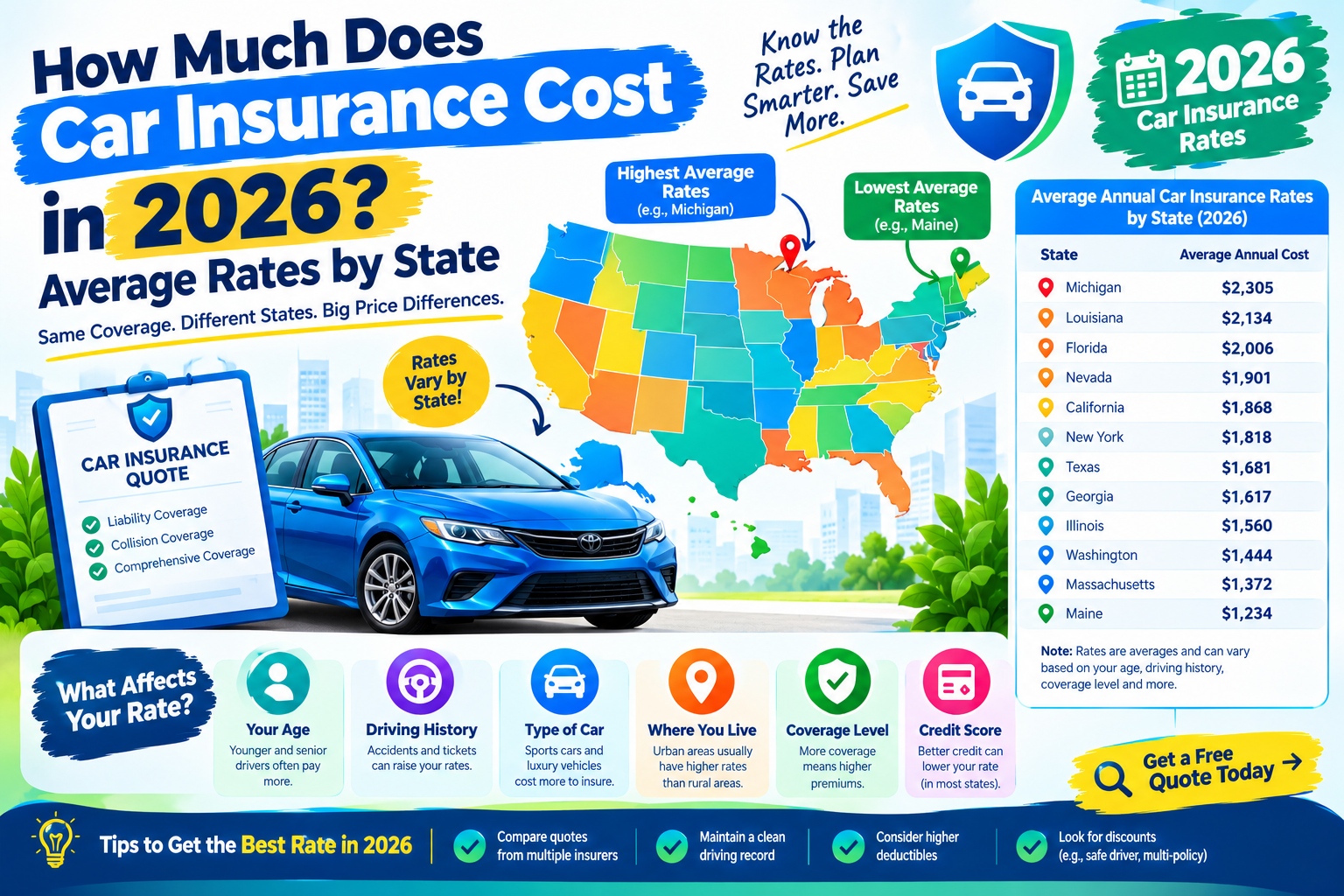
According to recent data, states like Michigan and Louisiana have been identified as having the highest average car insurance rates in the country. Michigan, with its unique no-fault insurance laws, and Louisiana, which faces high rates of accidents and vehicle thefts, contributes to the elevated costs. In contrast, states such as Vermont, Maine, and New Hampshire report significantly lower average rates, attributed to safer driving environments and lower population density. These contrasting circumstances provide a clear picture of the disparities in auto insurance pricing based on state-specific factors.
To illustrate the financial burden of car insurance, the average rate in Michigan is noted to exceed $2,500 annually, showcasing the impact of local regulations and insurance requirements. On the other hand, Maine’s average rates are around $1,200, highlighting the benefits of residing in regions with fewer claims and lower incidents of insurance fraud. Moreover, states such as Wisconsin and North Carolina maintain average rates that range between $1,300 and $1,600, which are considered more manageable compared to the national average.
This state-by-state analysis reveals essential insights into the variance of car insurance costs in the United States in 2026. By examining these rates, potential policyholders can better understand how their location might affect their insurance premiums and make more informed decisions when choosing a car insurance provider.
Trends Influencing Car Insurance Prices
The car insurance landscape is continuously evolving, influenced by a multitude of factors that contribute to the overall pricing structure in 2026. Notable trends such as advancements in technology, legislative changes, and shifts in consumer behavior are shaping the way insurance companies assess risk and determine premiums.
One of the significant technological advancements impacting car insurance costs is the increased use of telematics and data analytics. Insurance providers are now leveraging these technologies to gather detailed data about driving habits, vehicle usage, and safety measures. This shift allows insurers to offer more personalized pricing models, rewarding safe driving behaviors with lower premiums. As more consumers adopt these technologies, it is likely that we will see a greater variance in insurance costs based on individual driving patterns.
Changes in legislation are also playing a pivotal role in adjusting car insurance prices. With the introduction of stricter regulations regarding uninsured motorist coverage and minimum liability limits in various states, insurers may have to reevaluate their pricing strategies. Compliance with these changes can lead to increased operational costs for insurance companies, which may subsequently be passed on to consumers in the form of higher premiums. Furthermore, states are focusing on consumer protection laws that may impact how claims are processed and paid out, ultimately influencing the cost of car insurance.
In addition to technology and legislation, evolving consumer behavior is reshaping the insurance market. The rise in demand for eco-friendly vehicles and autonomous driving technology is prompting insurers to rethink their pricing structures. As more consumers prioritize sustainability, insurance providers may begin offering incentives for hybrid and electric vehicles, while also considering the unique risks associated with autonomous technology.
These interconnected trends highlight the dynamic nature of car insurance pricing in 2026. With continuous advancements and regulatory changes, both consumers and insurers must stay informed to navigate the complexities of the market and understand how these factors will influence car insurance costs in the near future.
The Impact of Credit Scores on Insurance Rates
Understanding the intricacies of car insurance premiums involves examining various contributing factors, one of the most significant being credit scores. In 2026, the impact of a driver’s credit score on their car insurance rates continues to be a critical area of concern for both insurers and insured individuals alike. Numerous studies have consistently shown a correlation between credit ratings and the cost of insurance, leading many insurers to use credit scores as an important determinant when calculating premiums.
Insurers assert that individuals with higher credit scores are statistically less likely to file claims compared to those with lower scores. As a result, they often reward policyholders with favorable credit ratings by offering them lower premiums. Conversely, those with poor credit scores may find themselves facing considerably higher rates. This trend emphasizes the need for drivers to be acutely aware of their credit scores, as these figures can substantially affect their insurance costs.
A comprehensive report published by the Insurance Information Institute indicated that, on average, drivers with excellent credit could save as much as 30% on their premiums compared to those with poor credit. This illustrates that not only is credit scoring a prevalent practice among insurers but it is also a vital component of determining a fair price for coverage. Furthermore, as the insurance industry evolves, it appears that the reliance on credit scores will remain steadfast, with companies continually refining their algorithms to incorporate new data.
In 2026, it is advisable for consumers to periodically review their credit reports and scores to ensure that they are aware of how their financial health could influence their insurance rates. Maintaining a good credit score not only provides advantages in securing loans but also proves beneficial in reducing car insurance costs. Therefore, understanding the relationship between credit scores and insurance premiums is essential for making informed decisions in car insurance shopping.
Tips for Finding Affordable Car Insurance
Finding affordable car insurance is essential for many consumers who wish to manage their budgets effectively. To begin with, comparing quotes from multiple insurance providers is vital. Each company assesses risk differently, and thus, premiums can vary significantly for the same coverage. Utilizing online comparison tools allows consumers to quickly view several rates side by side, making the decision process more efficient and informed.
Another strategy is to leverage discounts, which many insurers offer. These discounts can stem from various factors, including safe driving records, bundling policies (such as home and auto insurance), and installing safety features in vehicles. Additionally, consumers should inquire about discounts for low mileage, as driving less can often reduce insurance costs. By actively seeking these opportunities, individuals can reduce their overall premiums without compromising necessary coverage.
Assessing personal coverage needs is another fundamental aspect of finding affordable car insurance. Consumers should evaluate the minimum coverage required by their state and consider whether additional coverage is needed based on their circumstances. For instance, individuals with older cars may decide that comprehensive coverage is not necessary and might opt for higher deductibles to lower monthly payments. It is critical to strike a balance between adequate protection and what one can afford.
Furthermore, maintaining a good credit score can have a substantial impact on car insurance rates. Insurers often take credit scores into account when determining premiums, so maintaining a positive credit history can ultimately lead to lower costs. Regular reviews of one’s credit report and rectifying any errors can be beneficial in the long run.
In conclusion, navigating the landscape of car insurance to find affordable options requires effort and an informed approach. By comparing quotes, leveraging discounts, and assessing individual needs, consumers can secure coverage that meets their requirements without straining their finances.
The Role of Technology in Insurance Cost Management
The transformation of the car insurance industry is being significantly shaped by advances in technology. With the integration of tools such as telematics, artificial intelligence, and digital claims processing, insurance providers are gaining greater control over cost management and risk assessment. This section explores these developments and their implications for insurance costs.
Telematics, which involves the use of tracking devices in vehicles, allows insurers to monitor driving behaviors in real time. This data-driven approach enables companies to offer personalized rates based on actual driving patterns rather than generalized statistics. By rewarding safe drivers with lower premiums, telematics not only helps in cost management for insurers but also encourages safer driving practices among policyholders. The greater the data accuracy, the more effectively insurance costs can be tailored to reflect individual risk profiles.
Another critical innovation is the application of artificial intelligence (AI) in underwriting processes. AI systems can quickly analyze vast amounts of data, assessing risk factors with greater precision than traditional methods. This efficient data processing leads to quicker decisions on policy applications and more competitive pricing. Additionally, AI-driven analytics can predict future claims trends, allowing insurance companies to adjust their business strategies and reserve allocations proactively.
Digital claims processing is further streamlining the insurance landscape, reducing the time it takes to file and settle claims. This efficiency not only enhances customer satisfaction but also lowers administrative costs for the insurance providers. As claims processing becomes more automated, the potential for human error decreases, contributing to more precise cost forecasting and management.
As we move forward, it is evident that technology is playing an integral role in shaping the economics of car insurance. This evolution is set to continue, offering both challenges and opportunities for policyholders and insurers alike.
Future Predictions for Car Insurance Rates
As we look towards the future, the factors influencing car insurance rates appear to indicate a complex interplay of trends that could lead to significant shifts in the cost of coverage. Various elements, including technological advancements, legislative changes, and economic conditions, are expected to contribute to the overall landscape of car insurance prices by 2026.
One prominent factor shaping these future car insurance costs is the advancement of technology. The rise of connected and autonomous vehicles is anticipated to create safer driving conditions, potentially leading to a decrease in accident rates. This reduction in claims could encourage a decrease in car insurance premiums. However, the cost of integrating new technologies into vehicles may lead to increased repair costs, which insurers could offset by raising rates. Thus, the net effect on premiums will likely depend on how these competing factors balance out.
Additionally, the regulatory environment will play a critical role in determining future car insurance rates. Changes in state and federal regulations regarding insurance coverage requirements, minimum liability limits, and consumer protections could lead to fluctuations in rates across different regions. For instance, if regulations promote greater transparency and competition, consumers may benefit from lower prices. Conversely, if new requirements impose greater liability on insurers, we may witness a corresponding increase in premium costs.
Economic conditions will also be pivotal in shaping the future of car insurance rates. Inflationary pressures, consumer behavior, and the overall health of the economy will influence how insurers set their prices. In times of economic downturn, individuals may prioritize affordability, resulting in a higher demand for budget-friendly insurance options. This demand may prompt insurers to introduce more competitive pricing models.
In conclusion, car insurance rates in 2026 will likely be affected by a confluence of technological advancements, regulatory changes, and economic factors. Monitoring these trends will be essential for consumers and industry stakeholders alike as they navigate the evolving landscape of car insurance.
Conclusion and Final Thoughts
In conclusion, the exploration of car insurance costs in 2026 has unveiled significant trends and variations across different states. Understanding the average rates is essential for consumers as they seek the most suitable coverage options. As we have discussed, various factors influence car insurance costs, including state regulations, demographics, and the types of coverage chosen by drivers. By recognizing these variables, consumers can better navigate their choices in an increasingly complex insurance landscape.
Moreover, the year 2026 is marked by advancements in technology and increased data utilization within the insurance industry. Insurers are now capable of assessing risks more efficiently, leading to more personalized premium rates. This shift towards tailored coverage can be advantageous for consumers who prioritize safety and good driving records. As such, maintaining a clean driving history and understanding your vehicle’s safety ratings can significantly impact the premiums you may face.
The ongoing evolution in the car insurance market necessitates that consumers remain proactive in their search for competitive rates. Staying informed about state-specific regulations and industry trends is crucial in ensuring that you achieve the best value for your coverage. Comparisons among various providers and understanding the nuances of each policy can help consumers make sound decisions. Ultimately, as consumers navigate through their options, awareness of both emerging technologies and traditional factors will empower them in selecting a car insurance plan that aligns with their needs.